Wire report
A New NASA Design Turbocharges Nuclear Spacecraft
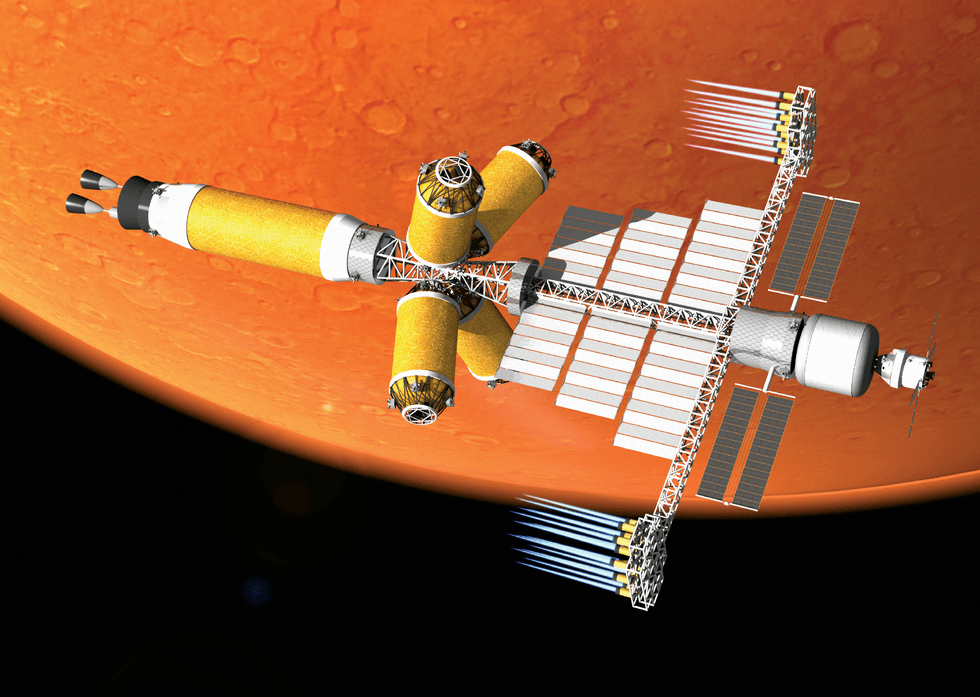
The biggest threat to any crewed expedition to Mars is time . NASA’s shortest blueprint for sending people to the Red Planet and back requires spending 620 days in space and 30 days on Mars. Even setting aside the compounding challenges of building life-support systems that can operate without resupply for that long, or the fact that longer journeys leave more time for unlucky accidents, life in microgravity and solar and cosmic radiation will inexorably exact their cumulative toll on human bodies. We want to make it possible to dramatically reduce the length of time crews must spend in space—down to just 335 days in transit or less. This will both simplify many engineering challenges and keep astronauts healthier and safer. We believe the key to this time reduction is a new approach to building a holy grail of space exploration, the bimodal nuclear rocket. In the 1960s, U.S. open-air gr
coverage / Wire report
Get updates, read source context, send useful records, share the story, or support the reporting work from the reading page.
The biggest threat to any crewed expedition to Mars is time . NASA’s shortest blueprint for sending people to the Red Planet and back requires spending 620 days in space and 30 days on Mars. Even setting aside the compounding challenges of building life-support systems that can operate without resupply for that long, or the fact that longer journeys leave more time for unlucky accidents, life in microgravity and solar and cosmic radiation will inexorably exact their cumulative toll on human bodies. We want to make it possible to dramatically reduce the length of time crews must spend in space—down to just 335 days in transit or less. This will both simplify many engineering challenges and keep astronauts healthier and safer. We believe the key to this time reduction is a new approach to building a holy grail of space exploration, the bimodal nuclear rocket. In the 1960s, U.S. open-air gr
Check the original link, updates, and responses when a detail is contested.
Open topic or search related wording such as records, sources, agencies, dates, and locations.
What happened
According to IEEE Spectrum’s source item, A New NASA Design Turbocharges Nuclear Spacecraft, The biggest threat to any crewed expedition to Mars is time . NASA’s shortest blueprint for sending people to the Red Planet and back requires spending 620 days in space and 30 days on Mars. Even setting aside the compounding challenges of building life-support systems that can operate without resupply for that long, or the fact that longer journeys leave more time for unlucky accidents, life in microgravity and solar and cosmic radiation will inexorably exact their cumulative toll on human bodies. We want to make it possible to dramatically reduce the length of time crews must spend in space—down to just 335 days in transit or less. This will both simplify many engineering challenges and keep astronauts healthier and safer. We believe the key to this time reduction is a new approach to building a holy grail of space exploration, the bimodal nuclear rocket. In the 1960s, U.S. open-air gr
Context
The development sits in VINI’s Technology file for readers following technology, science, product policy, markets, infrastructure, and the public consequences of innovation. The original report is linked so readers can check the source account, follow later updates, and compare new coverage against the first published record. The source item is dated 2026-08-26T12:00:01+00:00.
What to watch
Open questions include whether primary sources issue follow-up statements, whether local or market impacts become clearer, and whether additional reporting changes the timeline or adds material context.
Source
Primary source: A New NASA Design Turbocharges Nuclear Spacecraft via IEEE Spectrum. VINI cites and links the source; it does not reproduce the publisher’s full article text without rights clearance.
Keep following
This file can keep developing
vininews.com uses reader tips, public records, right-of-reply requests, corrections, and follow-up reporting to keep important stories current.
Support and subscriptions never buy coverage, placement, suppression, or corrections.
This VINI report keeps the original publisher link available and does not republish third-party article bodies without rights clearance. 1 reference listed.
Source links
- A New NASA Design Turbocharges Nuclear SpacecraftIEEE Spectrum - 2026-08-26T12:00:01+00:00
Reader comments
Moderated discussion
Comments are open to authenticated approved accounts, screened for spam and abuse, and published only after newsroom moderation unless editors change the story control.
No approved comments yet.
Substantive, civil comments can be submitted by approved account holders.